The Complete Inventory Management Guide for Warehouse Operators
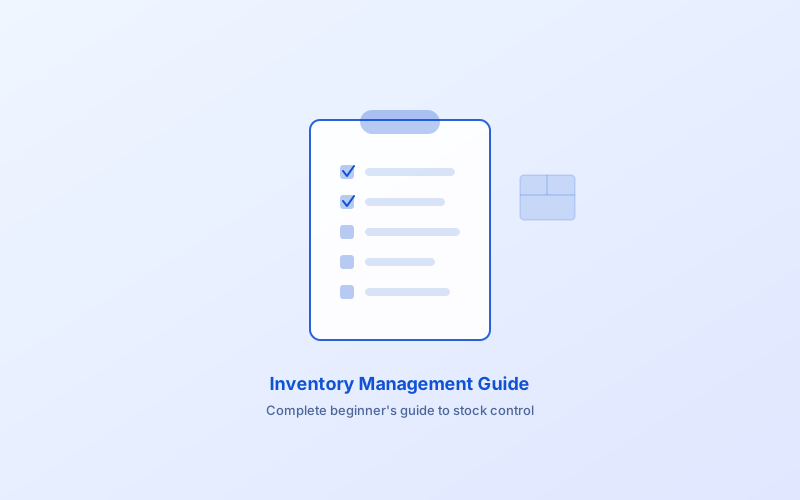
Inventory management is the foundation of profitable warehouse operations. It is the process of receiving, storing, tracking, and controlling stock so you always know what you have, where it is, and what state it is in. When inventory is wrong, everything downstream becomes expensive: stockouts create delays, overstock increases storage pressure, and stock inaccuracies cause picking and billing mistakes. This inventory management guide for warehouses is designed for beginners and growing teams. You will learn core concepts, common challenges, and practical techniques like FIFO, LIFO, and ABC analysis. You will also see how real-time tracking and warehouse inventory software help reduce errors and improve decision-making—so your warehouse stays accurate, efficient, and ready for demand.
What is Inventory Management?
Inventory management covers the full lifecycle of goods inside a warehouse: how products are received, assigned locations, updated in the system, picked, packed, and dispatched. In warehouse inventory management, the goal is accuracy across time—so your stock control system reflects reality, not estimates.
Why Inventory Management is Important
Good inventory management prevents stockouts, reduces overstocking, and improves warehouse efficiency. When inventory tracking is accurate, you can schedule labor confidently, replenish at the right time, and promise delivery dates that you can actually meet.
- Prevent stockouts: avoid missed sales and rush replenishment.
- Reduce overstocking: lower holding and storage costs.
- Improve efficiency: faster picking, fewer re-checks.
Types of Inventory in Warehouses
Warehouses commonly handle different inventory categories that move through different workflows:
- Raw materials: components used in production or fulfillment.
- Work-in-progress (WIP): partially processed items.
- Finished goods: fully ready items for shipment or distribution.
Knowing your inventory types helps you define storage rules, reordering logic, and picking priorities.
Common Inventory Management Challenges
Most cost problems start with operational visibility gaps. Common issues include manual tracking errors, lack of real-time inventory visibility, and poor planning that leads to inconsistent replenishment.
If your team relies on spreadsheets or disconnected tools, even small mistakes compound quickly across receiving, transfers, and dispatch.
Key Inventory Management Techniques
These techniques improve how you manage stock and meet customer expectations:
- FIFO (First In First Out): the oldest inventory is picked first, often used for quality-sensitive goods.
- LIFO (Last In First Out): newer inventory is used first, useful in specific accounting or operational contexts.
- ABC analysis: segment inventory by value and movement so high-impact SKUs get better control.
Importance of Real-Time Inventory Tracking
Real-time inventory tracking keeps your stock control system accurate as operations happen. Instead of waiting for end-of-month counts, you can see correct quantities and locations when receiving and picking occur—making decisions faster and reducing avoidable errors.
How Warehouse Software Improves Inventory Management
Warehouse inventory software reduces the manual work that causes mistakes. A modern warehouse management software can automate inventory updates, enforce location rules, and support inventory reporting that helps you identify issues early.
When software handles routine data entry and workflow steps, your team spends more time on accuracy and exceptions—not admin.
Best Practices for Inventory Management
To build stable inventory accuracy, combine process discipline with technology:
- Regular audits: schedule cycle counts and reconcile differences quickly.
- Use technology: centralize inventory tracking and reduce spreadsheet drift.
- Staff training: teach SOPs for receiving, transfers, picking, and verification steps.
How to Get Started with Inventory Management System
Getting started is easier when you follow a clear implementation path:
- Choose software: select a platform built for warehouse operations and reliable inventory tracking.
- Set up processes: define locations, receiving rules, reorder thresholds, and verification steps.
- Train your team: run onboarding and refreshers so everyone follows the same workflow.
Want to compare options? check pricing plans to find the right fit. For a faster rollout, contact our team and we will help you map processes to your daily warehouse workflow.
Warynx
Sharing insights on warehouse management, inventory optimization, and operational efficiency.